 Laziotony
Amar Subramanya is an Indian-origin researcher who has become the new AI-led President of Apple from Microsoft, replacing John Giannandrea after years of service. The 46-year-old Bangalore University student was recently employed by Microsoft in July after years of services at Google.
Who Is Amar Subramanya?
Early Life, Education, and Foundations of an AI Leader
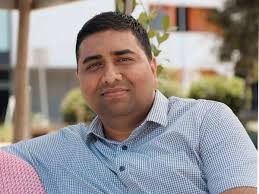
Amar Subramanya has emerged as one of the most influential voices in the modern artificial intelligence revolution, and his appointment as the new head of Apple’s AI division reflects a rare blend of academic brilliance, industry expertise, and technical leadership. When examining the trajectory of Amar Subramanya, it becomes clear that his ascent to this global role did not happen by accident. Instead, it was the product of disciplined study, intense curiosity, and years spent building scalable systems long before the world began speaking about foundation models and generative intelligence. His story begins in an environment that encouraged academic excellence, critical thinking, and a fascination with problem-solving — traits that would define every stage of his career.
Born into a family that valued education deeply, Amar Subramanya displayed an early interest in mathematics, logic, and technology. As a young student, he was captivated by the idea that machines could not only execute commands but also learn patterns and make predictions. While other children gravitated toward conventional hobbies, he found joy in dismantling devices, analyzing circuits, and attempting to understand how systems communicated internally. This early inclination toward analytical thinking laid the groundwork for a future shaped by computer science, engineering, and innovation.
His formal academic journey took shape at a reputable engineering institution, where he pursued his bachelor’s degree with a focus on electronics, communication, and computing. During this period, Amar Subramanya immersed himself in the foundational principles of algorithms, data structures, embedded systems, and signal processing. While many of his peers saw coursework as a path to stable employment, he approached it as an opportunity to understand the deeper mechanics behind how information is processed. Professors often noted his ability to connect abstract theory with practical implementation — a hallmark of engineers who eventually lead transformative technological shifts.
It was during his undergraduate years that Amar Subramanya discovered his passion for machine learning. Although the field was still far from mainstream, he gravitated toward emerging research on pattern recognition, neural networks, and predictive modeling. He began reading advanced research papers long before such material became common in university environments. His interest deepened to a point where he realized his future lay not just in engineering products but in developing the intelligent systems behind them.
Driven by this ambition, Amar Subramanya moved to the United States to pursue a graduate degree in computer science. His time as a graduate student became one of the most defining chapters of his early career. Immersed in an academic environment that encouraged experimentation, he worked alongside respected researchers, contributed to high-impact projects, and developed a specialization in machine learning and natural language processing. His doctoral research explored ways to make algorithms more efficient, scalable, and capable of understanding human language — concepts that years later would form the backbone of AI-enabled assistants and modern conversational systems.
Beyond the academic achievements, what distinguished Amar Subramanya during these early years was his ability to see AI not just as a technical challenge but as a tool capable of reshaping human-computer interaction. He envisioned a future where devices could anticipate user needs, respond intuitively, and learn autonomously. These ideas, once considered highly theoretical, are now at the core of AI innovation.
After completing his PhD, Amar Subramanya stepped into the tech industry at a time when machine learning was gaining momentum in both research labs and commercial applications. His early roles involved designing algorithms for large datasets, improving search systems, and contributing to the architecture of platforms that relied heavily on data-driven intelligence. His colleagues consistently described him as methodical, deeply knowledgeable, and effective at bridging technical teams with real-world applications.
This combination of academic grounding and early industry exposure positioned him as a sought-after expert in an era where major tech companies were racing to build more intelligent systems. From his earliest professional years, it was evident that Amar Subramanya possessed not only technical mastery but also leadership instincts — a rare blend that would eventually lead him to some of the largest AI projects in Silicon Valley. His journey from a young engineering student to one of the world’s most respected AI leaders is a testament to his focus, discipline, and unwavering commitment to advancing human-centric innovation.
Who Is John Giannandrea?
Background and Career at Apple
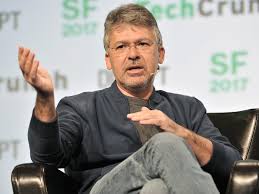
John Giannandrea, widely recognized for his pioneering contributions to artificial intelligence and machine learning, has played a deeply influential role in shaping modern consumer technology. Born in Scotland, Giannandrea developed an early fascination with computing during his teenage years—a passion that would eventually lead him to become one of the most respected leaders in global AI development. His early career blended engineering, entrepreneurship, and research, setting the foundation for the far-reaching impact he would go on to have in Silicon Valley.
Before joining the world’s largest tech companies, Giannandrea built a reputation as a visionary technologist with a rare ability to combine deep technical insight with practical product innovation. He co-founded several companies, including Metaweb Technologies, the creators of Freebase, an important structured database that set the stage for the modern knowledge graph. When Google acquired Metaweb in 2010, Giannandrea transitioned into a significant leadership role that allowed him to help transform Google’s search capabilities. His work contributed to Google’s evolution from a keyword-based search engine to one driven by semantic understanding, machine learning, and contextual intelligence. Under his influence, Google Search became far more intuitive, predictive, and responsive to natural language—an achievement widely acknowledged across the tech industry.
Giannandrea remained at Google for nearly a decade, eventually becoming the Senior Vice President of Search and Artificial Intelligence. In this role, he oversaw a major strategic shift within the company, championing the use of deep learning and advanced AI models in core products. He also helped guide Google’s ethical principles for the development of AI systems, emphasizing responsible innovation and long-term societal considerations. These accomplishments established him as a central figure in the movement to integrate AI into everyday digital experiences.
His transition to Apple in 2018 marked one of the most significant leadership shifts in modern tech history. Apple, long known for its hardware excellence and product design, was entering a crucial phase in which artificial intelligence and on-device machine learning were becoming essential pillars of product functionality. Giannandrea joined Apple initially as Chief of Machine Learning and AI Strategy, reporting directly to CEO Tim Cook. His mandate was both expansive and mission-critical: to elevate Apple’s AI capabilities, unify its machine-learning initiatives across hardware and software, and ensure that privacy-centric innovation remained at the core of these efforts.
At Apple, Giannandrea quickly became a driving force behind the advancement of Siri, the company’s intelligent assistant. He led efforts to improve Siri’s natural language processing, contextual awareness, and reliability—areas where Apple had faced growing scrutiny compared to competitors. He also guided the expansion of Apple’s machine learning frameworks, most notably Core ML, which empowers developers to integrate powerful on-device AI models within apps while preserving user privacy. His focus on on-device processing became a defining element of Apple’s AI approach, differentiating it from cloud-dependent models used by other tech giants.
Giannandrea’s influence extended beyond individual product features. He played a central role in shaping the overall architecture supporting AI across Apple’s ecosystem—from predictive typing and personalized recommendations to computer vision enhancements used in photography and augmented reality. As AI became increasingly central to iOS, macOS, watchOS, and Apple’s custom silicon, his leadership ensured that machine learning models were tightly integrated with Apple’s hardware, enabling faster, more secure, and more energy-efficient performance.
In recognition of his contributions, Apple promoted John Giannandrea to Senior Vice President of Machine Learning and Artificial Intelligence Strategy, placing him among the company’s highest-ranking executives. In this role, he continues to guide Apple’s future in a rapidly evolving AI landscape. His vision emphasizes personalization, user control, and privacy-preserving intelligence—principles that align deeply with Apple’s broader philosophy.
John Giannandrea’s career at Apple represents a key chapter in the company’s transformation from a hardware-centric manufacturer into a leader in intelligent computing. His work not only reshaped Apple’s products but also influenced industry standards for ethical, user-focused AI development. Through his leadership, Apple has strengthened its ability to innovate, adapt, and compete in an era defined by intelligent technology.
Why Did Apple Chose To Replace John With Amar Subramanya?
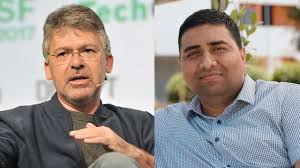
When Apple announced that John Giannandrea would step down from his role as Senior Vice President of Machine Learning and AI Strategy — transitioning to an advisory role before retiring in spring 2026 — the company simultaneously revealed that Amar Subramanya had been appointed as the new Vice President of AI.
The shift reflects a strategic recalibration by Apple amid growing pressure to accelerate its AI efforts. Critics and industry watchers argue the company has lagged behind rivals in delivering advanced generative-AI features and modern digital-assistant capabilities.
Amar Subramanya brings to Apple a strong record of technical and product-level experience. Immediately prior to joining Apple, he served as Corporate Vice President of AI at Microsoft — and before that, he spent 16 years at Google, including a key role as head of engineering for Google’s Gemini assistant. This background gives him direct familiarity with building large-scale AI systems and integrating them into consumer-facing products — the kind of expertise Apple now needs.
Under the new arrangement, Subramanya will lead critical AI domains: foundation models, machine-learning research, and AI safety and evaluation. He reports to Apple’s Senior Vice President of Software Engineering. Meanwhile, other aspects of the former AI division — infrastructure, search/knowledge, and services — are being redistributed to other executives.
This reorganization signals that Apple is refocusing its AI strategy: rather than a broad, monolithic AI division, the company seems to be streamlining functions — with a sharper emphasis on core model research and product-ready intelligence. Many see it as Apple’s attempt to catch up with rivals after delays in high-profile promises such as the enhanced version of its voice assistant, which was pushed back and caused criticism over execution speed.
In addition, Subramanya’s hiring underscores Apple’s desire for a leader who combines deep research credentials with proven product-engineering and delivery experience. With a background spanning two of the largest AI-leading firms in the world, he brings both technical depth and operational know-how — qualities that Apple evidently believes are necessary to deliver on its evolving AI ambitions.
In short, Apple’s decision to bring in Amar Subramanya reflects a strategic pivot: it acknowledges past misses, recognizes the intensifying AI race, and bets on renewed leadership to accelerate innovation while maintaining the company’s values on privacy, reliability, and user experience. Under Subramanya’s leadership, Apple’s AI efforts may become more agile, focused, and competitive — potentially resulting in smarter assistants, better on-device intelligence, and deeper integration across its ecosystem.
What Would Amar Subramanya Do Differently To Get Apple AI Ahead Of Other Tech Companies?
The mandate for Subramandya is narrower, more focused: he leads “Apple Foundation Models, ML research, and AI safety & evaluation” under software chief Craig Federighi — while other parts of Giannandrea’s former domain (infrastructure, search/knowledge, services) are reassigned elsewhere. This reorganization offers the first hint of what Apple hopes will be a faster, more agile AI push under Subramandya.
From Broad Strategy to Focused Execution
Under Giannandrea, Apple built much of the underlying AI infrastructure and laid the foundation for machine-learning frameworks and tools. Those efforts provided core capabilities — but as generative AI and foundation-model advances accelerated industry-wide, critics argued Apple’s deliverables lagged behind. Projects like the overhauled voice assistant (Siri) have faced repeated delays.
Subramandya’s arrival suggests Apple wants to double down on turning those foundations into real, competitive products — rapidly. As someone who recently served as AI-VP at another major tech company and who once led engineering work for a leading assistant project, he brings firsthand experience in deploying large-scale AI systems for consumer use.
Emphasis on Foundation Models, ML Innovation & AI Safety
By putting foundation models, research, and safety under Subramandya, Apple signals its intention to prioritize core AI capabilities. Instead of dispersing AI responsibilities across many silos, the new structure centralizes the hardest, most forward-looking work. This may allow Apple to more quickly iterate on next-gen AI — whether for intelligent assistants, on-device smart features, or cross-platform AI services — while maintaining rigorous standards for reliability and privacy.
Given Subramandya’s engineering depth and familiarity with large-scale AI deployment, Apple likely aims for a faster transition from research to product-grade AI. In other words: less waiting, more shipping.
Aligning AI with Apple’s Core Strengths — Hardware + Privacy + Integration
Apple has always emphasized seamless integration of hardware and software, plus a strong commitment to user privacy. Subramandya’s role under Federighi — the software lead — suggests AI will be tightly woven into the operating systems and devices, rather than treated like a separate experimental arm.
Because Subramandya has experience building scalable AI across major platforms, he may be better positioned to optimize AI for Apple Silicon, ensure efficient on-device processing, and integrate privacy-preserving methods — balancing AI power with Apple’s long-standing values.
Clearer Accountability and Product-Driven Mindset
The structural change also brings clearer accountability. Giannandrea’s former broad domain is now split — which can reduce bureaucratic inertia. Subramandya’s focused remit gives him a manageable set of responsibilities, making it easier to track progress, set goals, and deliver results. That kind of clarity often boosts execution speed.
Combined, these elements suggest Apple under Subramandya may shift from cautious, incremental AI developments to bolder, faster rollouts that directly challenge competitors already leading in generative AI.
In short: with Amar Subramandya at the helm, Apple seems ready to shift from building AI foundations to delivering real AI-powered experiences, using a leaner, more focused structure, and blending deep technical expertise with a stronger emphasis on execution and integration.
Amar Subramanya Path Through Big Tech: Leadership, Innovation, and AI Excellence
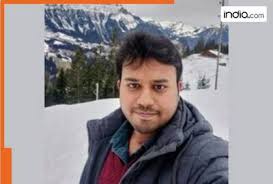
Long before his appointment as Apple’s head of AI, Amar Subramanya spent years shaping the direction of artificial intelligence across several major technology companies. His experience spans research, engineering leadership, and high-level strategic roles — each contributing to the deeply informed perspective he brings to Apple today. The second phase of his career reads like a blueprint for excellence in the AI ecosystem, illustrating how technical sophistication paired with leadership capacity can create global impact.
Amar Subramanya’s entry into big tech began at a time when data-driven intelligence was becoming a competitive differentiator. Companies needed experts who could not only design algorithms but also scale them across distributed systems and integrate them into real-world products. His early work centered on machine learning models that optimized search ranking, language understanding, and predictive behavior. These foundational contributions taught him the dynamics of large systems, user behavior, and the complexities of designing AI that performs reliably at scale.
His progression into leadership roles was a natural evolution. Teams responded well to his clear communication style, structured thinking, and ability to translate complex research into operational frameworks. As he took on more responsibility, Amar Subramanya played a vital role in shaping engineering culture — particularly in advocating for rigorous evaluation, responsible deployment, and cross-functional collaboration. AI, he often emphasized, becomes powerful only when embedded responsibly into systems that serve millions.
One of the defining periods of his career came when he joined a major tech company’s AI and search division, where he contributed to core components of digital assistance and language modeling. The work required a deep understanding of multimodal systems: speech, text, vision, and predictive inference. As the landscape of artificial intelligence expanded, he led teams working on natural language algorithms that powered conversational technologies. These systems later influenced the wider industry as the foundation for digital assistants, chat interfaces, and on-device intelligence.
His leadership style stood out for its engineering rigor. Rather than pushing for rapid releases, Amar Subramanya encouraged teams to prioritize system stability, safety, and fairness. AI, he believed, must be both innovative and responsible. Under his guidance, teams developed key evaluation metrics that helped improve the reliability of digital assistants and reduce hallucinations — long before such issues became mainstream topics of discussion.
After more than a decade of high-impact contributions, Amar Subramanya transitioned into even more senior roles where he oversaw end-to-end AI strategy. These responsibilities included model development, product integration, cross-team alignment, and ethical considerations. It is in these leadership positions that he refined his philosophy on accessible AI: technology should enhance human productivity without compromising privacy or manipulating behavior.
His work attracted the attention of multiple global tech leaders, leading to senior appointments that significantly expanded his influence. He took on the challenge of helping organizations migrate from traditional machine learning pipelines to modern, model-centric architectures powered by foundation models. These roles required him to anticipate industry trends, articulate long-term vision, and ensure that teams were equipped with the tools to innovate responsibly.
What set Amar Subramanya apart during this period was his insistence on building systems that balance capability with accountability. In internal discussions, he often emphasized that AI can only succeed commercially when it is trustworthy, consistent, and aligned with user expectations. This mindset has proved increasingly relevant as companies face scrutiny over bias, misinformation, and security vulnerabilities within AI ecosystems.
Across all his positions in big tech, Amar Subramanya earned a reputation not only for technical mastery but also for organizational clarity. He was known for bringing structure to complex research agendas, creating frameworks that helped teams tackle ambitious challenges systematically. Colleagues frequently described him as calm, analytical, and deeply collaborative — qualities that made him a stabilizing leader during times of rapid industry transformation.
By the time he stepped into the next major phase of his career, Amar Subramanya had built an extraordinary foundation: extensive experience in AI architecture, strong cross-functional leadership, and a proven track record in scaling intelligent systems to global audiences. His work shaped the modern digital assistant ecosystem, redefined how models are evaluated, and influenced best practices for responsible deployment.
This wealth of experience made him one of the most qualified leaders for the role that awaited him at Apple — a company preparing to redefine its position in the AI world.
Articles You May Also Like:
Somtochukwu Christelle Maduagwu Biography: Family, Spouse, Real Name, Career, Net Worth, Age (2025)
Bethel Damian Biography 2025 —Background, Education And Lifestyle
Nathi Mthethwa Biography 2025: Age, Spouse, Children, Career, Net Worth And Death
Roger Lukaku Biography 2025: Age, Spouse, Children, Career, Net Worth And Death
Biography Of Kirk Bondad 2025 —Childhood, Pageant Journey, Age & Awards
Big Jiggy Biography 2025 —Real Name, Age, Relationship And Career
Boluwatife Balogun Biography 2025, Early Life, Education And Career
Leading Apple’s AI Future: Amar Subramanya’s Vision, Strategy, and Impact
Amar Subramanya’s appointment as the new head of Apple’s AI division marks a profound shift in the company’s technological direction. Apple, known for its focus on design, privacy, and seamless user experience, has entered a new era where artificial intelligence is no longer a supporting feature but a core driver of innovation. As the company seeks to strengthen its presence in the AI landscape, the arrival of Amar Subramanya comes at an ideal moment.
The decision to entrust Apple’s AI future to Amar Subramanya speaks volumes about the company’s priorities. Apple needed a leader who understands not only cutting-edge research but also the practical constraints of deploying AI across billions of devices. Amar Subramanya’s background — balancing scientific depth with operational expertise — makes him uniquely equipped to guide Apple through its most transformative phase.
His responsibilities at Apple encompass several critical domains. First, he oversees the development of foundation models that power Apple’s intelligent features. These models must be efficient enough to run on device, secure enough to protect user data, and flexible enough to support a range of applications. Unlike cloud-dependent AI systems, Apple’s approach emphasizes privacy-preserving architecture. Under Amar Subramanya, the company is expected to accelerate efforts to build AI that is both powerful and privacy-aligned.
Second, he leads Apple’s AI research initiatives, shaping the future of natural language capabilities, contextual personalization, and multimodal intelligence. His expertise in large-scale systems gives him a deep understanding of how models can adapt to different devices — from iPhones and Macs to wearables and emerging product categories. Apple’s long-term vision of “intelligence everywhere” aligns closely with his professional philosophy.
Third, Amar Subramanya is responsible for ensuring AI safety — an area that has become increasingly important as generative models grow more complex. His previous work developing evaluation frameworks is expected to guide Apple in setting industry standards for accuracy, fairness, and reliability. By implementing robust testing, Apple can reduce hallucinations, prevent harmful outputs, and strengthen user trust.
Under his leadership, Apple is poised to make significant advancements in products like Siri, which has long been criticized for lagging behind its competitors. Industry observers anticipate a new generation of Apple intelligence — more conversational, more context-aware, and better integrated across applications. Amar Subramanya’s experience with multimodal systems positions him to guide Siri into a modern era powered by on-device reasoning and dynamic understanding.
Beyond product upgrades, his influence extends to Apple’s engineering culture. He is known for fostering collaborative environments where researchers, developers, and designers work cohesively toward long-term goals. His organized, methodical approach aligns well with Apple’s disciplined engineering ethos. Teams under his leadership are expected to benefit from clear strategic direction, structured workflows, and a renewed emphasis on research excellence.
Another important aspect of his appointment is Apple’s desire to remain competitive in the global race for AI leadership. As other tech giants release advanced generative tools, Apple faces pressure to accelerate innovation without sacrificing its core values. Amar Subramanya represents this balance: rapid advancement paired with responsible execution. His presence signals that Apple intends not only to catch up but to redefine what user-centric AI looks like in the coming decade.
Perhaps the most compelling part of Amar Subramanya’s vision is his belief that AI should empower users without overwhelming them. Apple products have always been designed to simplify complex tasks, and under his guidance, AI will enhance that mission. From adaptive interfaces to contextual suggestions, Apple’s ecosystem could soon evolve into an intelligent companion that understands preferences, routines, and needs — all while respecting user privacy.
As the global AI landscape continues to evolve, Amar Subramanya stands at a pivotal intersection of technology, ethics, and innovation. His leadership marks a new era where Apple is no longer reactive in the AI space but shaping the conversation with its own philosophy and technological breakthroughs. The transformation ahead will undoubtedly define Apple’s next generation — and Amar Subramanya is the architect guiding that future.
FAQ — Amar Subramanya
1. Who is Amar Subramanya?
Amar Subramanya is an AI researcher, engineer, and technology leader who became the head of Apple’s artificial intelligence division. His background includes decades of experience in machine learning, large-scale systems, and digital assistant technology.
2. What makes Amar Subramanya qualified to lead Apple’s AI division?
He brings a rare combination of research expertise, engineering leadership, and experience building AI systems at global scale. This makes him exceptionally prepared to guide Apple’s next wave of innovation.
3. What will Amar Subramanya focus on at Apple?
He is responsible for foundation models, machine-learning research, AI safety, and integrating intelligence across Apple’s device ecosystem.
4. Will Apple’s AI change under his leadership?
Yes. Apple is expected to deliver more advanced, privacy-aligned AI features, including major improvements to Siri and on-device intelligence.
5. How does Amar Subramanya view AI?
His philosophy centers on responsible innovation: AI should be powerful, safe, and trustworthy while improving user experiences without compromising privacy.


 Laziotony