
 Laziotony
Abraham Accords Explained: Why Donald Trump Wants More Countries to Join Amid Iran Peace Talks (2026 Update)
The Abraham Accords 2026 are back in global headlines as Donald Trump pushes more countries to join amid Iran peace talks. Here’s what it means, the countries involved, and why it matters.
BREAKING GLOBAL DIPLOMACY SHIFT
The Abraham Accords have suddenly returned to the center of global political discussions in 2026 after renewed calls from former U.S. President Donald Trump to expand the agreement to more countries — and possibly connect it to ongoing Iran peace negotiations.
What started in 2020 as a peace deal between Israel and a few Arab nations is now being discussed as a potential full Middle East diplomatic realignment.
But the biggest question right now is:
Why is Trump pushing countries to join the Abraham Accords at the same time Iran peace talks are happening?
Let’s break it down clearly.
WHAT ARE THE ABRAHAM ACCORDS?
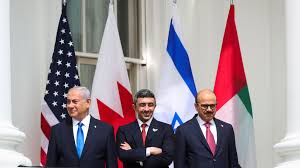
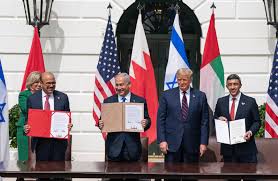
The Abraham Accords are diplomatic agreements signed in 2020 between Israel and several Arab countries, mediated by the United States.
Their goal was simple but powerful:
- Normalize relations between Israel and Arab nations
- Open trade and economic cooperation
- Improve regional security
- Encourage tourism and investment
- Reduce decades of political tension
The name “Abraham” represents shared religious heritage across Judaism, Christianity, and Islam.
COUNTRIES IN THE ABRAHAM ACCORDS (2026 UPDATE)
Official Members
- 🇦🇪 United Arab Emirates
- 🇧🇭 Bahrain
- 🇲🇦 Morocco
- 🇸🇩 Sudan (partial implementation)
- 🇮🇱 Israel
- 🇺🇸 United States (mediator)
These countries form the core of the agreement.
Countries Now Being Discussed for Expansion
Recent diplomatic conversations have linked several countries to possible expansion:
- Saudi Arabia
- Qatar
- Egypt
- Jordan
- Turkey
- Pakistan
- Other regional powers
These countries are NOT official members yet but are part of ongoing global negotiations.
WHY THE ABRAHAM ACCORDS MATTER IN 2026
The accords are not just political documents — they have changed how the Middle East operates.
Key impacts include:
- Increased trade between Israel and Gulf nations
- Growth in technology partnerships
- Expansion of direct flights and tourism
- New security cooperation networks
- Stronger U.S. influence in Middle East diplomacy
But now, the discussion has moved far beyond normal diplomacy.
WHY DONALD TRUMP IS PUSHING NEW COUNTRIES TO JOIN
In 2026, Donald Trump has renewed pressure on countries to join or expand the Abraham Accords as part of a larger geopolitical strategy tied to Iran negotiations.
Here are the key reasons behind this push:
1. Creating a “Single Peace Framework” for the Middle East
Trump’s idea is to build one large diplomatic structure where:
- Israel has normalized relations with most Arab countries
- Trade flows freely across borders
- Regional conflicts are reduced through cooperation
Instead of multiple small agreements, the goal is a unified peace system.
2. Linking Iran Peace Talks to Regional Normalization
One of the biggest developments is the connection between:
- Iran negotiations
- Israel-Arab normalization
- Abraham Accords expansion
The idea is that if Iran reaches a peace agreement, surrounding countries should also normalize relations with Israel.
This creates a chain reaction of diplomacy across the region.
3. Strengthening U.S. Global Influence
By expanding the Abraham Accords, the United States positions itself as:
- The main peace broker
- The central diplomatic power in the Middle East
- A key player in global security decisions
This increases U.S. geopolitical control in a highly strategic region.
4. Fast-Tracking Diplomatic Agreements
Trump’s approach is also about speed.
By urging countries to sign early:
- Negotiations move faster
- Pressure increases on undecided nations
- Diplomatic delays are reduced
- Public commitment becomes stronger
This “pressure diplomacy” approach is controversial but effective in accelerating agreements.
5. Preparing for a Possible Future Without Iran Isolation
One of the most surprising discussions in 2026 is the idea that Iran could eventually be part of a broader peace structure if tensions improve.
While this is still theoretical, it reflects a long-term vision where:
- Iran moves closer to diplomacy
- Regional conflicts reduce over time
- Economic cooperation expands across former rivals
WHY THIS IS CONTROVERSIAL
The push for expansion is not without criticism.
Major concerns include:
1. Ongoing Israel-Palestine Conflict
Many Arab countries say normalization cannot happen without resolving Palestinian statehood issues.
2. Political Resistance
Some governments face strong internal opposition to joining the accords.
3. Iran-Israel Tension
Iran remains one of Israel’s strongest regional rivals.
4. Regional Stability Risks
Rapid expansion could increase tensions instead of reducing them.
Articles You May Also Like:
Nanyah Music Biography 2026:Early Life, Career And Death
Dene BBMzansi Biography 2026 —Age, Background & Career
Destiny Boy Biography 2026 —Age, Background & Death Story
Ayo Labinjoh Biography 2026 —Age, Background & Relationship
Anu Adeleke Biography 2026: Early Life, Age And Controversy
CAN IRAN JOIN THE ABRAHAM ACCORDS?
At the moment:
- Iran is NOT part of the Abraham Accords
- There is no official negotiation for membership
However, analysts suggest three long-term possibilities:
Scenario 1: Full Peace Agreement
Iran and Israel normalize relations — highly unlikely in the short term.
Scenario 2: Indirect Cooperation
Iran participates in regional diplomacy without formal normalization.
Scenario 3: Separate Agreement
Iran signs a different peace framework outside the Abraham Accords.
GLOBAL IMPACT OF EXPANSION
If the Abraham Accords expand further, the global effects could be huge:
- Stronger Middle East economy
- Increased energy cooperation
- New trade routes between Asia, Europe, and Africa
- Reduced military tensions
- Growth in tourism and aviation
- More international investment in the region
CHALLENGES FACING EXPANSION
Despite strong political momentum, challenges remain:
- Long-standing historical conflicts
- Religious and ideological differences
- Public opposition in several countries
- Unresolved regional wars
- Lack of full trust between key nations
FINAL VERDICT
The Abraham Accords 2026 shows that the agreement is no longer just a peace deal between a few countries — it is becoming a major global geopolitical strategy involving the United States, Middle Eastern powers, and potentially even Iran in the future.
Donald Trump’s push for expansion reflects a bold attempt to reshape the Middle East into a unified diplomatic and economic region.
But whether this vision succeeds or fails will depend on:
- Political will
- Regional stability
- And the resolution of long-standing conflicts
Frequently Asked Questions (FAQ) – Abraham Accords 2026
1. What are the Abraham Accords?
The Abraham Accords are diplomatic agreements signed in 2020 between Israel and several Arab countries to normalize relations, improve trade, and promote regional cooperation in the Middle East.
2. Which countries are part of the Abraham Accords?
The official signatories include the United Arab Emirates, Bahrain, Morocco, Sudan (partially implemented), Israel, and the United States as a mediator.
3. Why is Donald Trump pushing more countries to join the Abraham Accords?
Donald Trump is pushing expansion as part of a broader strategy to create a unified Middle East peace framework, strengthen U.S. influence, and link regional normalization with ongoing Iran peace negotiations.
4. Is Iran part of the Abraham Accords?
No. Iran is not part of the Abraham Accords and has no official agreement to join. However, it is sometimes mentioned in discussions about future regional peace frameworks.
5. Can Iran ever join the Abraham Accords?
In theory, yes, but it would require major political changes and a peace agreement with Israel. At the moment, this is considered highly unlikely in the short term.
6. Why are the Abraham Accords important?
They are important because they have improved diplomatic relations in the Middle East, increased trade and tourism, and reduced long-standing political tensions between Israel and some Arab nations.
7. Which countries are expected to join next?
Countries often mentioned in expansion discussions include Saudi Arabia, Qatar, Egypt, Jordan, Turkey, and Pakistan, although none have officially joined yet.
8. What is the main goal of the Abraham Accords?
The main goal is to promote peace, economic cooperation, and diplomatic normalization between Israel and Arab countries while improving regional stability.


 Laziotony