
A mortgage is a long-term loan used to finance the purchase of a home or property, where the property itself serves as collateral until the loan is fully repaid. It outlines how different mortgage products—such as fixed-rate loans, adjustable-rate mortgages (ARMs), and government-backed options—help buyers meet various financial goals. The main context of the article is to guide homeowners and buyers on choosing the best mortgage product for 2026 based on expected market trends, interest-rate forecasts, and affordability concerns, ensuring borrowers make informed, strategic decisions in a shifting housing landscape.
Understanding the Mortgage Stress Surge in 2025 and What It Means for Homeowners in 2026

The year 2025 marked one of the most turbulent periods in the global housing and lending markets, and the word Mortgage became a central point of public conversation. Across North America, Europe, and parts of Africa and Asia, millions of homeowners felt increasing financial pressure due to rising interest rates, slower wage growth, and the inflationary hangover from previous years. By late 2025, economists began reporting a clear pattern: mortgage stress was rising faster than expected, and homeowners were starting to feel the consequences.
This growing concern has set the stage for 2026, a year expected to bring both challenges and unique opportunities. For anyone considering buying, refinancing, or maintaining a home, understanding the evolving mortgage landscape is not only useful—it is essential. The foundation of financial stability for many families depends on how they navigate this ongoing shift.
The 2025 Mortgage Pressure: What Really Happened?
2025 began with a wave of optimism. Inflation was slowing in several major economies, and policymakers hinted at the possibility of lower interest rates. But this optimism was short-lived. Central banks across the world maintained higher-than-anticipated lending rates for longer than expected, leading to a slow-burning affordability crisis for homeowners with variable-rate mortgages.
Fixed-rate mortgage holders were not entirely safe either. Those whose fixed terms expired in 2025 faced the reality of refinancing into much higher interest rates—some doubling, others tripling from the rates they secured years earlier. The effect was immediate: monthly mortgage payments skyrocketed, leaving many families struggling to adjust their budgets.
By mid-2025, default warnings, mortgage delinquencies, and early signs of foreclosure spikes were being reported in both emerging and developed markets. Financial analysts described the situation as a “quiet crisis” because it didn’t resemble the dramatic crash of 2008, but it still created deep, long-term financial strain across millions of households.
The Human Side of Mortgage Stress
Unlike economic downturns where unemployment is the primary cause of household distress, the 2025 mortgage pressure affected even people with stable jobs and steady incomes. High living costs, high borrowing costs, and stagnant wage growth created an environment where everyday families found the structure of their financial lives weakening month by month.
Mortgage stress is not just about struggling to make a payment—it affects lifestyle, mental health, family planning, and long-term financial security. Households began cutting back on healthcare, education, travel, and even basic expenses to maintain their mortgage obligations. Some families pivoted to renting out rooms, converting garages, or taking part-time jobs to stay afloat. Others downsized or relocated entirely.
By the final quarter of 2025, the phrase “mortgage survival strategy” became a trending topic across financial platforms and housing forums. Homeowners wanted solutions—not only to cope with rising payments but to better prepare for what might come next.
What to Expect in 2026: A Year of Cautious Adjustment

As we step into 2026, the mortgage sector stands at a critical turning point. Three transformations are already taking shape:
1. Gradual Rate Stabilization, Not Dramatic Reduction
While rate cuts are possible, global central banks are moving cautiously. Most forecasts suggest moderate rate drops rather than drastic relief. This means homeowners should prepare for a mortgage environment that is still expensive, though more predictable.
2. Increase in Refinancing Applications
As soon as rates show any sustained decline, refinancing will surge again. Homeowners will look for relief wherever possible—extending loan terms, consolidating debts, or switching lenders.
3. Government and Lender Intervention
In several countries, policy discussions are underway to provide relief for homeowners facing extreme mortgage stress. These may include:
- extended amortization plans
- temporary payment freezes
- interest-rate caps
- first-time buyer incentives
- sustainability-linked mortgage programs
Housing policy in 2026 will attempt to balance economic stability with homeowner protection.
Why 2026 May Also Bring Opportunity
Despite the challenges, 2026 presents strategic opportunities for homebuyers and investors. Housing prices began cooling in late 2025, making some markets more accessible than before. For individuals who have maintained financial stability, the coming year may offer a window to:
- purchase undervalued homes
- negotiate competitive mortgage terms
- invest in rental or multi-family real estate
- benefit from government-backed incentive schemes
The key advantage in 2026 is timing—success will depend on monitoring rate shifts, lender promotions, and market cycles.
What Mortgage Product Should You Choose in 2026?
Choosing the right mortgage in 2026 will depend on your financial goals, income stability, credit profile, and how long you plan to stay in the home. However, based on current market projections, housing trends, and interest-rate forecasts, three mortgage products stand out as the most strategic choices for 2026 borrowers.
1. Fixed-Rate Mortgages (FRM) – Best for Stability
As inflation cools and interest rates gradually normalize, the traditional 30-year fixed-rate mortgage will remain the safest option for homeowners who want predictable monthly payments. If rates drop in early 2026, locking in a fixed mortgage will protect buyers from future market spikes. This product is ideal for long-term homeowners and first-time buyers looking for financial security.
2. Adjustable-Rate Mortgages (ARM) – Best for Short-Term Savings
If experts predict lower rates stretching into late 2026 or 2027, a 5/1 or 7/1 ARM may become attractive again. These mortgage products typically start with significantly lower rates, making them suitable for buyers planning to move, refinance, or sell the home within 5–10 years. As long as borrowers understand the adjustment periods, ARMs can generate substantial upfront savings.
3. First-Time Buyer and Low-Down-Payment Mortgages – Best for Affordability
With housing affordability still a challenge, government-backed products like FHA, VA, and USDA mortgages will remain critical in 2026. These mortgage products offer lower down payments, more flexible credit requirements, and competitive interest rates. Many states are also expanding first-time homebuyer programs that include grants, tax reductions, and closing-cost assistance.
Which Mortgage Is Best for You?
- Choose a fixed-rate mortgage if you want stability.
- Choose an ARM if you plan to move or refinance within a few years.
- Choose FHA/VA/USDA loans if you want affordability and easier qualification.
How Mortgage Stress Is Reshaping the Housing Market in 2026
As the world transitions from the turbulence of 2025 into the uncertainty of 2026, the mortgage landscape continues to evolve in ways that are reshaping the global housing market. While housing cycles have always shifted with economic pressures, what we witnessed in 2025 was different: it was a recalibration of expectations. Homeowners, lenders, regulators, and investors were forced to confront a new normal—one defined by high interest rates, tighter lending standards, and shifting buyer behavior. These forces are setting the tone for 2026, a year where the real estate market will be shaped as much by strategic caution as by emerging opportunity.
Cooling Home Prices and the New Buyer Psychology
One of the most significant consequences of rising mortgage stress in 2025 was the cooling of home prices across multiple regions. Buyers grew more hesitant as mortgage rates climbed, and mortgage qualification became increasingly difficult. This naturally reduced demand, causing sellers to adjust their pricing expectations.
In 2026, this trend is expected to continue, but at a slower pace. Instead of widespread price drops, markets are likely to see a soft landing—a stabilization rather than a crash. Economists predict:
- moderate price declines in overheated urban areas,
- stable or slightly rising prices in emerging suburban markets,
- increased inventory as more homes return to the market, and
- cautious but growing buyer interest as mortgage rates stabilize.
Buyer psychology has also changed. The single question that dominated 2025—“Can I afford this mortgage?”—remains a leading concern in 2026. More buyers are prioritizing affordability over aspiration. They’re willing to delay homeownership, choose smaller homes, relocate further from city centers, or opt for fixer-uppers simply to secure a manageable mortgage payment.
A Shift Toward Variable and Hybrid Mortgage Products
Before the rate hikes, the long-term fixed-rate mortgage was widely considered the safest option. But with mortgage rates sitting at multi-year highs, more borrowers are exploring alternative options:
- variable-rate mortgages with lower introductory rates,
- hybrid mortgages combining fixed and variable terms, and
- interest-only mortgages (in select markets where allowed).
This shift is particularly notable among younger buyers who prioritize flexibility over long-term predictability. In 2026, mortgage lenders are expected to innovate more aggressively, offering products tailored for affordability, including:
- extended 35- to 40-year amortization periods,
- green mortgages tied to energy-efficient renovations, and
- credit-scored adaptive payments based on income stability.
The mortgage market is moving toward personalization, where borrowers can structure their loans to align with their financial realities.
Refinancing Becomes a Survival Tool
During 2025, homeowners who faced sudden mortgage spikes used refinancing as a buffer against financial collapse. But refinancing was not always possible due to high rates and tighter lending conditions.
In 2026, refinancing becomes more than a financial tactic—it becomes a survival strategy. Even a slight rate drop can save homeowners hundreds of dollars a month, creating breathing room in their budgets. As rate cuts begin cautiously rolling out, we will see:
- a wave of refinance applications,
- homeowners switching lenders for better terms,
- debt consolidation into mortgage structures, and
- increased negotiation power for consumers.
Lenders, aware of rising competition, will likely begin offering incentivized refinancing packages to attract stressed borrowers.
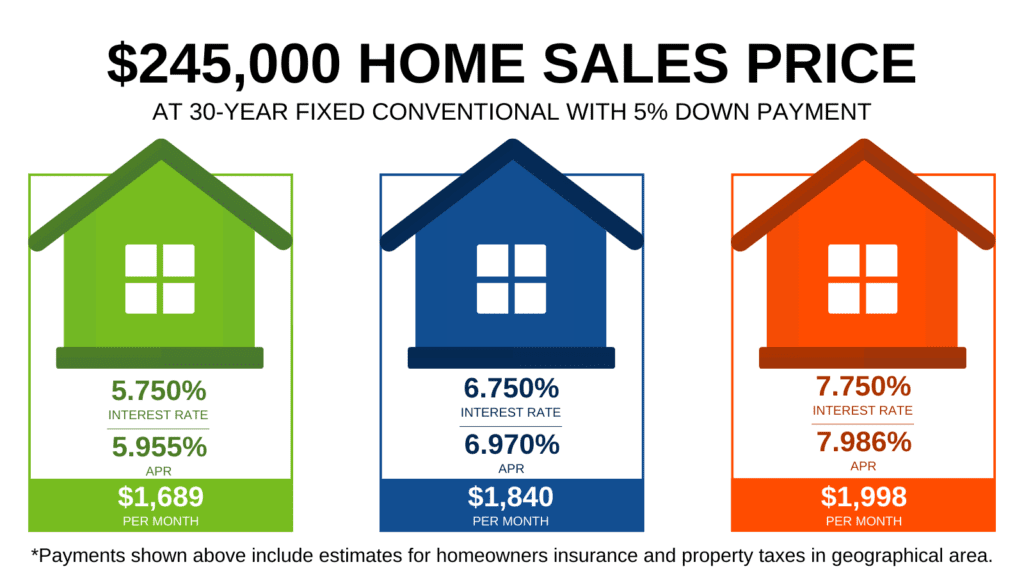
Renting vs. Buying: The 2026 Decision Shift
One of the most notable shifts driven by mortgage stress is the growing preference for renting, even among households financially capable of buying. High mortgage rates have made renting seem more stable, predictable, and financially manageable in the short term.
In 2026:
- more families will renew leases instead of entering high-rate mortgage agreements,
- investors may shift focus toward rental properties due to increased tenant demand,
- urban rental markets may tighten, pushing renters into suburban and rural regions.
The rent–buy dynamic is evolving not because homeownership is undesirable, but because the financial threshold for securing a mortgage has been elevated.
Increased Government and Regulatory Involvement
Mortgage stress is more than an individual financial issue; it has become an economic concern. When delinquencies rise, entire economies feel the impact. This forced many governments to step in during 2025, and even more intervention is expected in 2026.
Policies targeted for 2026 include:
- expanded first-time buyer support programs,
- interest rate relief for low-income households,
- mortgage insurance adjustments,
- tax incentives for refinancing, and
- tighter regulations on speculative buying.
Some countries are even exploring emergency mortgage assistance funds to prevent mass foreclosures. The goal for 2026 is stability, not stimulation. Regulators want to keep people in their homes, encourage responsible lending, and prevent real estate markets from spiraling into crisis.
Article You May Also Like:
Nano Banana AI 2025 —Why It’s Better Than ChatGPT & How To Use It
Playstation 2025 —Cheapest Black Friday Stores To Buy PS5 Online
Amar Subramanya Biography 2025 —Age, Family, AI Career & Net Worth
Somtochukwu Christelle Maduagwu Biography: Family, Spouse, Real Name, Career, Net Worth, Age (2025)
Bethel Damian Biography 2025 —Background, Education And Lifestyle
Nathi Mthethwa Biography 2025: Age, Spouse, Children, Career, Net Worth And Death
Roger Lukaku Biography 2025: Age, Spouse, Children, Career, Net Worth And Death
Biography Of Kirk Bondad 2025 —Childhood, Pageant Journey, Age & Awards
Big Jiggy Biography 2025 —Real Name, Age, Relationship And Career
Boluwatife Balogun Biography 2025, Early Life, Education And Career
The Investor Landscape: A Year of Strategic Positioning
For property investors, 2026 is shaping up to be a year of calculated opportunity. Investors who held off during the volatility of 2025 are re-entering markets where:
- distressed properties emerge,
- motivated sellers negotiate more aggressively,
- mortgage-strapped homeowners consider selling, and
- rental markets strengthen.
Cash buyers stand to benefit the most, as they are unaffected by mortgage volatility. However, investors using mortgages are also finding advantages through:
- creative financing arrangements,
- hybrid loan structures, and
- partnerships with private lenders offering flexible terms.
The combination of stabilizing prices and flexible lending products makes 2026 an attractive entry point for strategic investors.
Why the Mortgage Market Matters More Than Ever in 2026
At its core, the mortgage system is the backbone of the housing market. When the mortgage environment tightens, the entire real estate ecosystem shifts—from pricing and construction to investment and household stability.
In 2026, the mortgage industry will dictate:
- who can buy homes,
- how homes are financed,
- how long people hold properties,
- and the future trajectory of real estate values.
Understanding these patterns gives homeowners, buyers, and investors a massive advantage. The more insight you have into mortgage shifts, the better decisions you can make in a year defined by both risk and opportunity.
Smart Mortgage Strategies for 2026 + Future Market Predictions
As 2026 unfolds, the global economy is moving through a phase defined by uncertainty, readjustment, and opportunity. The mortgage landscape—shaken by the rate hikes, inflationary pressures, and economic strain of 2025—is transitioning into a period where informed decision-making is more valuable than ever. For current homeowners, aspiring buyers, and real estate investors, 2026 is a pivotal year where smart strategies can shape long-term financial stability. By understanding the evolving mortgage environment and anticipating future trends, individuals can position themselves to thrive in a shifting housing market.
1. Refinancing With Strategy, Not Emotion
Refinancing is poised to become one of the top financial decisions in 2026, but it must be approached strategically. With interest rates projected to stabilize and gradually decline, homeowners will be eager to explore refinancing options. However, not every opportunity will be beneficial.
Smart refinancing in 2026 means:
- comparing multiple lenders, not refinancing with the first offer
- evaluating whether a lower rate actually offsets closing costs
- choosing your mortgage term wisely (30-year for lower payments, 15-year for faster payoff)
- deciding whether to consolidate other debts for easier cash flow
- timing your refinance when rates dip, not when they simply “seem better”
For homeowners emerging from the mortgage stress of 2025, the right refinance could serve as a long-term financial reset, giving them breathing room and renewed stability.
2. Choosing the Right Mortgage Product in 2026
One of the most notable shifts in the housing market has been the diversification of mortgage products. Lenders who once leaned heavily on traditional fixed-rate loans are now offering a range of flexible mortgage options tailored to different financial situations.
Borrowers should consider:
Fixed-Rate Mortgages
Ideal for those who want predictability and plan to stay long-term. Rates may still be high early in 2026 but expected to soften toward the end of the year.
Variable-Rate Mortgages
A popular choice for borrowers anticipating rate declines. They offer lower introductory rates but come with risk if the economy fluctuates.
Hybrid Mortgages
Part fixed, part variable—perfect for borrowers seeking balanced security and savings.
Long-Amortization Mortgages (35–40 years)
These reduce monthly payments, offering relief to households facing affordability challenges.
Green Mortgages
Designed to support energy-efficient upgrades or sustainable homes. With rising climate policies, these are expected to become highly attractive in 2026.
Choosing the right mortgage depends on personal stability, risk tolerance, and long-term financial goals.
3. Preparing for Mortgage Qualification: A Tougher but Clearer Process
Mortgage qualification tightened dramatically in 2025. Lenders demanded:
- stronger credit scores
- higher down payments
- detailed proof of income
- stable employment history
This stricter approach is not expected to loosen significantly in 2026, but it will become more standardized and predictable. To improve mortgage eligibility, borrowers should:
- reduce credit card balances
- avoid taking new loans
- build a high credit score (680+ ideal, 720+ excellent)
- strengthen savings for down payment and reserves
- maintain stable employment for at least 12 months
Because lenders want low-risk borrowers in an uncertain economy, financial discipline becomes the gateway to better mortgage terms in 2026.
4. Considering the Rent-vs-Buy Equation Until Rates Drop Further
Many potential buyers in 2025 opted to continue renting due to unaffordable mortgages. In 2026, renting remains a practical choice for individuals who:
- do not have sufficient down payment
- expect to relocate within a few years
- want to wait for interest rates to fall
- prefer stability in monthly costs
However, for those with stable income, strong credit, and the ability to secure a favorable mortgage, 2026 presents a valuable opportunity to buy at softened price levels before a new wave of demand increases prices again in 2027 or 2028.
5. Real Estate Investment Strategies in 2026
Investors are expected to play a major role in shaping the 2026 housing market. With mortgage stress forcing some homeowners to sell and cooling markets creating new entry points, this year is ideal for strategic acquisitions.
Key opportunities for investors include:
- Distressed Properties: Owners facing mortgage stress may sell below market value.
- Rental Properties: Demand remains strong due to high mortgage rates.
- Multi-Family Units: Offer steady income and lower vacancy risk.
- Fix-and-Hold Properties: Buy low during the cooling period, hold for appreciation in later years.
Investors who master financing strategies—like partnering with private lenders or negotiating flexible mortgage terms—will outperform those relying solely on traditional loans.
6. Predictions for the Future Mortgage Market Beyond 2026
Looking ahead, experts project several long-term trends:
Gradual Decline in Interest Rates
Rates may fall slowly over the next 2–3 years but are unlikely to return to the ultra-low levels of the early 2020s.
Rise of Digital and AI-Driven Mortgage Approvals
Automated underwriting, AI-powered risk analysis, and digital mortgage processing will become standard.
Growth of Sustainable Mortgage Programs
Governments will intensify incentives for energy-efficient homes, making green mortgages more attractive.
Tighter Regulation of Investment Properties
To prevent speculative buying, regulators may impose higher taxes or stricter lending requirements.
Increased Preference for Multi-Generational Housing
Rising costs may push families to combine financial resources and share housing.
Across all these trends, the mortgage remains the core component influencing affordability, demand, and long-term financial planning.
FAQ
1. Why was mortgage stress so high in 2025?
Mortgage stress surged due to rapidly rising interest rates, stagnant wages, inflation pressure, and refinancing shocks as many fixed-rate loans expired. Homeowners with variable rates were hit the hardest, while those refinancing faced significantly higher payments.
2. Will mortgage rates drop in 2026?
Mortgage rates are expected to stabilize and decline gradually during 2026. However, they are unlikely to return to the extremely low rates seen in the early 2020s. Homebuyers and homeowners should expect moderate relief rather than drastic changes.
3. Is 2026 a good year to buy a house?
Yes, for many people. Home prices have softened, competition is lower, and rates may begin to fall later in the year. However, buyers must evaluate their financial stability, credit score, down payment, and long-term plans before committing to a mortgage.
4. What type of mortgage is best for 2026 buyers?
The best mortgage depends on your financial situation. Fixed-rate mortgages provide long-term stability, while variable and hybrid options may offer short-term savings if rates decline. Long-term amortization mortgages can reduce monthly costs for affordability.
5. Should I refinance my mortgage in 2026?
Refinancing is recommended when you can lower your interest rate enough to offset closing costs or when consolidating debt into a lower monthly payment. Homeowners must compare multiple lenders and analyze long-term savings before refinancing.
6. Are green mortgages worth considering?
Yes. Green mortgages offer incentives for energy-efficient homes or eco-friendly renovations. They can reduce utility costs, increase property value, and provide access to government incentives. As sustainability becomes a priority, these mortgages will continue rising in popularity.
7. Will home prices continue falling?
Home prices may decline slightly in 2026, but a market crash is unlikely. Many regions will experience stabilization rather than steep drops. Some suburban and rural markets may even see moderate growth as buyers seek affordability.
8. What is the biggest challenge for 2026 homebuyers?
The biggest challenge is affordability. High mortgage rates combined with strict lending criteria make qualification difficult. Building credit, saving for a larger down payment, and comparing lenders can help overcome this obstacle.
9. How can I prepare financially for a mortgage in 2026?
Strengthen your credit score, reduce debt, save aggressively for a down payment, and maintain stable income. These steps increase approval chances and lower the long-term cost of your mortgage.
10. Will renting be cheaper than owning in 2026?
In many regions, renting may still be cheaper in the short term due to high mortgage rates. However, long-term renters miss out on equity growth. The decision depends on personal finances, location, and long-term goals.