
Lawrence Agubuzu is an 84-year-old Nigerian Traditional ruler from South-East. Chief Lawrence is currently trending due to his recent comment on Nnamdi Kanu’s arrest.
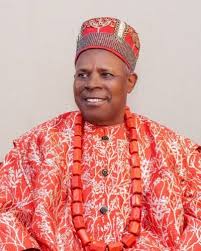
Chief Lawrence Agubuzu Biography, Background, and His Comments on Nnamdi Kanu’s Arrest
Who Is Chief Lawrence Agubuzu?
Lawrence Agubuzu, popularly known as Chief Lawrence Agubuzu, is a respected traditional leader from Ezeagu Local Government Area in Enugu State, Nigeria.
He is recognized within his community for his traditional title, influence in local affairs, and participation in discussions concerning regional and national issues affecting the Southeast.
Early Life and Origin
His Majesty, Igwe Ambassador Dr. Lawrence Okolio Chikezie Agubuzu, was born on 27th October 1942 in Awene Village, Ezema Olo, located in Ezeagu Local Government Area of Enugu State, Nigeria.
He began demonstrating exceptional academic brilliance at an early age. In 1955, he graduated from Saint Joseph’s Primary School, Olo Town, finishing at the top of his class. This early achievement set the foundation for a lifelong record of excellence, discipline, and dedication.
In the early 1960s, he worked as a Primary School Teacher before proceeding to the University of Nigeria, Nsukka (UNN), where he studied Political Science. In 1967, he graduated as the best student in Political Science, earning distinguished academic prizes.
His academic journey continued internationally. Between 1980 and 1981, he pursued postgraduate studies at the University of Lagos. He later studied at Howard University in Washington, D.C. (1982–1984), and furthered his academic exposure at the University of Besançon, France, in 1987.
Professionally, Igwe Agubuzu built an illustrious career in diplomacy and public service. He served as a Foreign Service Officer from 1971 to 1996. Between 1984 and 1986, he was Commissioner for Local Government, Rural Development, and Chieftaincy Matters in the old Anambra State.
From 1989 to 1991, he represented Nigeria at the United Nations in New York as Ambassador and Deputy Permanent Representative. He later served as Nigeria’s High Commissioner (Ambassador) to Zambia with concurrent accreditation to Malawi from 1991 to 1999.
On the continental stage, he became Assistant Secretary-General of the defunct Organization of African Unity (OAU) and later served as Commissioner of the African Union (AU) from 1999 to 2003.
In 2006, he ascended the throne as the Traditional Ruler of Ezema Olo Kingdom. His leadership extended beyond his kingdom when he served as Chairman of the Enugu State Council of Traditional Rulers from 2013 to 2023. In 2014, he represented the South East as a delegate to the National Conference.
In academia, he made history as the first Chancellor of the National Open University of Nigeria (NOUN), serving from 2015 to 2021. In 2021, he became the first Chancellor of the Federal University of Kashere (FUK), Gombe State, a position he continues to hold.
Since August 1, 2022, he has also been serving as Chairman of the South East Council of Traditional Rulers.
His Majesty Igwe Ambassador Dr. Lawrence Okolio Chikezie Agubuzu’s life reflects a distinguished legacy of scholarship, diplomacy, leadership, and traditional authority both nationally and internationally.
Traditional Leadership and Community Role
In Igbo culture, the title “Chief” is conferred based on merit, service, and societal contribution. Chiefs often serve as:
- Custodians of tradition
- Mediators in disputes
- Advisors in community governance
- Voices of their people in regional matters
Lawrence Agubuzu is regarded as one of the respected traditional figures within Ezeagu, participating in conversations that affect the broader Southeast region.
Chief Lawrence Agubuzu’s Comments on Nnamdi Kanu’s Arrest
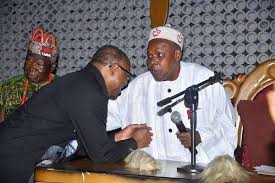
One of the major reasons Chief Lawrence Agubuzu recently trended online was due to his public comments regarding the arrest and detention of Nnamdi Kanu.
Nnamdi Kanu is the leader of the Indigenous People of Biafra (IPOB), a separatist movement advocating for an independent Biafran state in southeastern Nigeria. Indigenous People of Biafra has been at the center of national debates concerning secession, security, and constitutional rights.
Kanu was arrested and has faced legal proceedings in Nigeria on charges related to terrorism and other allegations brought by the federal government.
Agubuzu’s Position
In his remarks, Chief Lawrence Agubuzu reportedly addressed the broader implications of Kanu’s arrest on peace, unity, and stability in the Southeast.
His comments were interpreted as emphasizing:
- The need for dialogue and peaceful resolution
- The importance of law and order
- Concern for the wellbeing of the Igbo people
- The necessity of political solutions over violence
His statement sparked discussions across social media platforms, especially among supporters and critics of IPOB.
Why His Comments Generated Attention
Issues surrounding Nnamdi Kanu remain highly sensitive and politically significant in Nigeria.
When a traditional leader such as Chief Lawrence Agubuzu speaks on such matters, it often attracts attention because:
- Traditional rulers are seen as moral authorities
- Their statements may influence public opinion
- They represent grassroots community sentiment
- They can serve as bridges between government and local populations
As a result, his remarks quickly circulated online, contributing to his trending status.
Public Reaction
Reactions to Chief Agubuzu’s comments were mixed.
Some individuals praised him for calling for calm and peaceful engagement, while others debated whether traditional leaders should take public positions on politically sensitive matters.
The conversation reflects the ongoing tension between:
- Regional political aspirations
- National security concerns
- Community leadership roles
- Youth activism in the Southeast
The Role of Traditional Leaders in Political Discussions
In southeastern Nigeria, traditional rulers often hold significant informal influence. While they may not hold elected political office, their words can shape:
- Community direction
- Public mood
- Grassroots mobilization
- Dialogue between citizens and authorities
Chief Lawrence Agubuzu’s involvement in the discussion about Nnamdi Kanu underscores the intersection between tradition and modern political discourse.
Articles You May Also Like:
Nanyah Music Biography 2026:Early Life, Career And Death
Dene BBMzansi Biography 2026 —Age, Background & Career
Alex Pretti Biography 2026—Family, Career, Net Worth & Death
Rob Hirst Biography 2026 —Age, Family, Career & Death
Destiny Boy Biography 2026 —Age, Background & Death Story
Ayo Labinjoh Biography 2026 —Age, Background & Relationship
Anu Adeleke Biography 2026: Early Life, Age And Controversy
Sunshine Biography 2026 —Skit Career, Age, Origin & Death
Thandeka Tshabalala Biography 2026 —Age, Family & Career
Carterefe Wife, Elma Biography 2026, Early Life, Relationship And Controversy
Daniel Laryea Biography 2026 —Age, Background & Career
Somtochukwu Christelle Maduagwu Biography: Family, Spouse, Real Name, Career, Net Worth, Age (2025)
Bethel Damian Biography 2025 —Background, Education And Lifestyle
Nathi Mthethwa Biography 2025: Age, Spouse, Children, Career, Net Worth And Death
Roger Lukaku Biography 2025: Age, Spouse, Children, Career, Net Worth And Death
Frequently Asked Questions (FAQ)
Who is Chief Lawrence Agubuzu?
Lawrence Agubuzu is a titled chief and community leader from Ezeagu Local Government Area in Enugu State, Nigeria.
Where is Chief Lawrence Agubuzu from?
He is from Ezeagu in southeastern Nigeria.
Why is Chief Lawrence Agubuzu trending?
He gained attention following public comments regarding the arrest and continued detention of Nnamdi Kanu.
Who is Nnamdi Kanu?
Nnamdi Kanu is the leader of the Indigenous People of Biafra (IPOB), a group advocating for the creation of an independent Biafran state.
What was Agubuzu’s position on the issue?
He reportedly emphasized peace, dialogue, and stability while addressing the broader impact of the situation on the Southeast region.